987. Vertical Order Traversal of a Binary Tree
https://leetcode.com/problems/vertical-order-traversal-of-a-binary-tree/
---
Intuition
We need to track position of each node with x, y coordinates.
We can use DFS => recursive in order traversal to walk through all nodes.
Once we collect all the nodes, we need to sort them in the right order.
We sort nodes once, and then traverse the sorted data structure
Array list supports sorting in O(N log (N)), and traversing in O(N).
We need the right comparator to sort it right
Key takeaways
Time - O(n log (n)) - Sort all nodes
Space - O(n) - Collect all nodes
Given a binary tree, return the vertical order traversal of its nodes values.
For each node at position
(X, Y), its left and right children respectively will be at positions (X-1, Y-1) and (X+1, Y-1).
Running a vertical line from
X = -infinity to X = +infinity, whenever the vertical line touches some nodes, we report the values of the nodes in order from top to bottom (decreasing Y coordinates).
If two nodes have the same position, then the value of the node that is reported first is the value that is smaller.
Return an list of non-empty reports in order of
X coordinate. Every report will have a list of values of nodes.
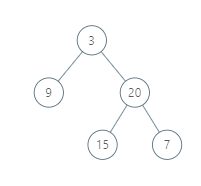
Example 1:
Input: [3,9,20,null,null,15,7]
Output: [[9],[3,15],[20],[7]]
Explanation:
Without loss of generality, we can assume the root node is at position (0, 0):
Then, the node with value 9 occurs at position (-1, -1);
The nodes with values 3 and 15 occur at positions (0, 0) and (0, -2);
The node with value 20 occurs at position (1, -1);
The node with value 7 occurs at position (2, -2).
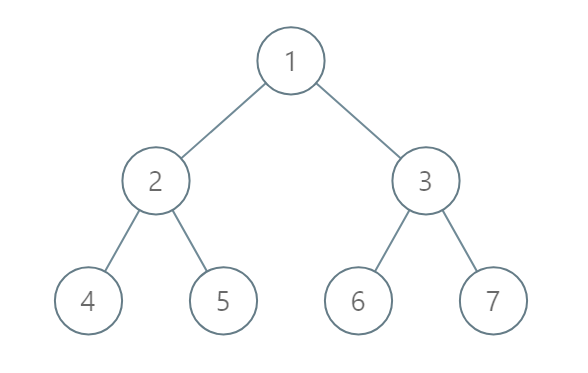
Example 2:
Input: [1,2,3,4,5,6,7]
Output: [[4],[2],[1,5,6],[3],[7]]
Explanation:
The node with value 5 and the node with value 6 have the same position according to the given scheme.
However, in the report "[1,5,6]", the node value of 5 comes first since 5 is smaller than 6.
Note:
- The tree will have between 1 and
1000nodes. - Each node's value will be between
0and1000.
Intuition
We need to track position of each node with x, y coordinates.
We can use DFS => recursive in order traversal to walk through all nodes.
Once we collect all the nodes, we need to sort them in the right order.
We sort nodes once, and then traverse the sorted data structure
Array list supports sorting in O(N log (N)), and traversing in O(N).
We need the right comparator to sort it right
Key takeaways
- Right comparison function,
- Set the nested array list in output correctly
Time - O(n log (n)) - Sort all nodes
Space - O(n) - Collect all nodes
